
From hospital practice to circular innovation: ENKORE’s Reference Use Cases at Frisius MC Eco-Design and Circular Healthcare Forward at Medical Packaging Conference 2025
ENKORE partners recently came together at Frisius MC in Leeuwarden for an in-person working session focused on the co-development of the project’s Reference Use Cases. The activity brought together ENKORE partners and stakeholders, including Frisius MC, STZ, SMEs, industrial partners and academic organisations, to jointly assess how circular practices for medical single-use devices and packaging can be advanced in real healthcare settings.
The working session was part of ENKORE’s multi-stakeholder co-creation and co-development approach. Partners met at Frisius MC to listen, exchange information and start building a shared understanding with hospital teams around the practical opportunities and constraints that shape the use, sorting, disposal and management of medical single-use devices and packaging.
This framing is central to ENKORE. The activity was not conceived as a simple visit or observation exercise, but as a collaborative working session between project partners. Its purpose was to support the co-creation and co-development of the Reference Use Cases in practice, helping all participants build a shared map of opportunities to improve circularity in healthcare.
Behind every medical product used in a hospital, there is a complex journey. Materials are procured, delivered, stored, used, separated and eventually managed as waste. Understanding this journey is essential for ENKORE, whose work focuses on bringing circular solutions into healthcare without compromising safety, quality or day-to-day clinical practice.
With this aim, ENKORE partners worked together at Frisius MC to assess how hospital processes can support the transition towards more circular practices for single-use devices and their packaging. Particular attention was given to single-use devices for irrigation and dialysis therapies, which represented one of the main focus areas of the session, alongside sustainable packaging materials and the scaling of recycling systems for medical devices and packaging in hospitals.
Co-developing Reference Use Cases in real healthcare settings
ENKORE’s Reference Use Cases are the real-world settings where the project’s innovations are being co-created, tested and validated. These use cases are not simply demonstrations of predefined solutions. They are collaborative environments where project partners and healthcare stakeholders jointly identify needs, map opportunities and develop pathways that can support the adoption of circular solutions across European healthcare systems.
In this context, the working session at Frisius MC helped partners move from theoretical assumptions to a practical, shared understanding of how products and materials circulate within a hospital environment. The aim was not to produce recommendations from external partners to the hospital, but to build a common map of opportunities, co-owned by all those involved, to improve circularity in medical single-use devices and packaging.
Hospitals such as Frisius MC are active stakeholders in this transition. Their experience and operational knowledge are essential to ensure that future circular solutions are not designed in isolation, but developed together with the healthcare teams and organisations that understand how these systems work in practice.
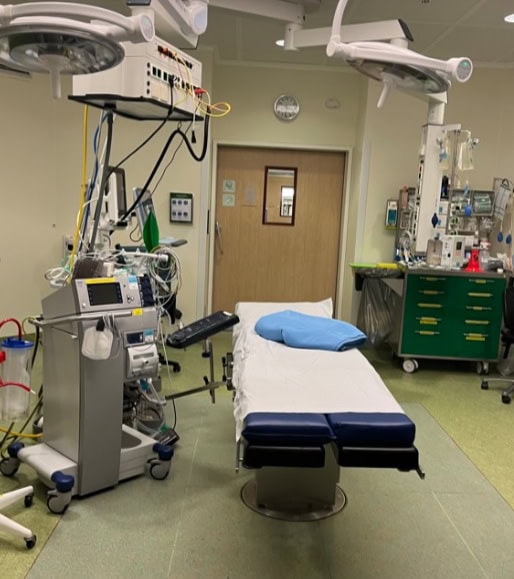
Understanding the internal-to-external waste value chain
A central objective of the working session was to examine the internal waste stream value chain, from product use to disposal, and to understand how these internal processes connect with external waste management and recycling pathways.
Partners discussed how selected medical single-use devices and packaging materials move across different stages of the hospital environment, including procurement and logistics, storage and internal distribution, clinical use, internal sorting and external collection. This systemic view is important because circularity depends not only on the design of products and materials, but also on the way they are used, separated, collected and managed throughout the value chain.
For ENKORE, this internal-to-external perspective is particularly relevant. It helps identify where circular interventions may be feasible, where practical constraints need to be considered, and where better alignment may be needed between hospital routines, material flows and downstream recycling systems.
The working session also highlighted the importance of everyday practices in enabling circular healthcare. Even when recyclable materials are available, their recovery depends on clear sorting procedures, appropriate infrastructure, understandable labelling and workflows that make sense for healthcare staff.
From material flows to practical circular pathways
One of the key insights from the session was that circular healthcare solutions need to be technically sound, operationally feasible and compatible with existing healthcare environments. Material innovation alone is not enough. Circular pathways also require clear information, practical separation processes and coordination between the different actors involved in the full value chain.
The discussions at Frisius MC helped partners reflect on how medical single-use devices and packaging could be managed more sustainably, with particular attention to reducing waste, improving material flows and supporting safer, more circular practices where feasible.
This work is especially relevant for single-use devices used in irrigation and dialysis therapies, where the project aims to better understand how circular approaches can be developed without compromising clinical safety, quality or efficiency.
Sustainability in procurement and decision-making
Another important aspect discussed during the working session was the role of sustainability in procurement and decision-making. As healthcare organisations increasingly consider environmental criteria alongside safety, quality and performance, future circular solutions will need to respond to the practical requirements that shape purchasing and implementation decisions.
Frisius MC is part of a wider hospital network in which STZ, also an ENKORE partner, supports shared strategic activities, including those related to sustainability. This connection is highly valuable for ENKORE, as it helps ensure that the project’s work is informed by real healthcare priorities and by the practical conditions under which circular solutions may be adopted.
In this context, the working session at Frisius MC helped partners move from theoretical assumptions to a practical, shared understanding of how products and materials circulate within a hospital environment. The aim was not to produce recommendations from external partners to the hospital, but to build a common map of opportunities, co-owned by all those involved, to improve circularity in medical single-use devices and packaging.
Hospitals such as Frisius MC are active stakeholders in this transition. Their experience and operational knowledge are essential to ensure that future circular solutions are not designed in isolation, but developed together with the healthcare teams and organisations that understand how these systems work in practice.
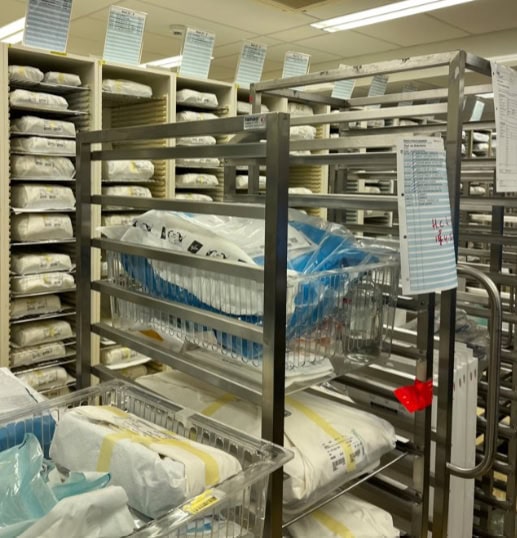
From co-creation to implementation
The working session at Frisius MC provided ENKORE partners with a more detailed understanding of the practical conditions that shape the use, sorting, disposal and management of medical single-use devices and packaging in hospitals. It also helped identify where circular interventions may be possible, and where additional support may be needed to make them feasible in day-to-day clinical practice.
For a project working at the intersection of healthcare, sustainability and circular design, these real-world insights are essential. They ensure that proposed solutions are grounded in the realities of clinical environments and developed together with the stakeholders who will play a key role in making circular healthcare possible.
The lessons gathered through this working session will support ENKORE’s ongoing work to co-create and develop circular pathways for medical single-use devices and packaging across Europe, with a particular focus on irrigation and dialysis therapies, sustainable packaging materials and the full internal-to-external waste value chain.
Through this collaborative approach, ENKORE aims to contribute to a healthcare system that is safer, more sustainable and better prepared for the transition towards circularity.
Stay Update with Our Newsletter
Receive the latest updates on the project’s milestones and findings.
By clicking Sign Up you’re confirming that you agree with our Terms and Conditions.
Insights
Latest Enkore Presentation
Explore our reports and scientific papers on sustainability.
ENKORE Project Overview
Learn about Project Enkore: its vision, progress, and next steps.
Discover Our Knowledge Hub
Stay informed on ENKORE’s latest advancementsto sustainable healthcare practices.